|
|
|
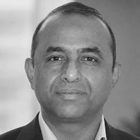
Shahzada Ahmad
University of Barcelona, Spain
Keynote – Plenary Session
Shahzada Ahmad is an ICREA professor at the University of Barcelona and directs NEOM (New Energy & Optical Materials) labs. Prior to this, he was an Ikerbasque professor, and his scientific interests include materials for semiconductors and energy. From 2012 to 2017, he was program director at Abengoa Research, a corporate research center, where he led disruptive projects and served as an interface between the business group and the technological development path. His scientific publications list reflects his interest in the domain of physical chemistry and materials science, with a research mission to develop innovative materials for energy and semiconductors. He is a strong advocate for renewable energy and regularly writes popular science articles for the public at large at leading platform
|
|
|
|
|
|
|
|
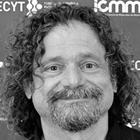
Jordi Arbiol
ICREA & ICN2, Spain
Keynote – Plenary Session
Jordi Arbiol graduated in Physics at Universitat de Barcelona (UB) in 1997, where he also obtained his PhD (European Doctorate and PhD Extraordinary Award) in 2001 in the field of transmission electron microscopy (TEM) applied to nanostructured materials. He also worked as Assistant Professor at UB. In 2009 he was appointed as ICREA Professor and holds this position since then. From 2009 to 2015 he was Group Leader at Institut de Ciència de Materials de Barcelona, ICMAB-CSIC. He was the President of the Spanish Microscopy Society (SME) from 2017 to 2021, was Vice-President from 2013 to 2017 and from 2009 to 2021 he was Member of its Executive Board. In 2018 he was elected as Member of the Executive Board of the International Federation of Societies for Microscopy (IFSM) (2019-2026). Since 2015 he is the leader of the Group of Advanced Electron Nanoscopy at Institut Català de Nanociència i Nanotecnologia (ICN2), CSIC and BIST. He is the Scientific Coordinator for the Materials Science Projects at the Joint Electron Microscopy Center at ALBA Synchrotron ( JEMCA). He has been one of the founder members of e-DREAM. Since 2023 he is Associate Editor of Nano Letters (American Chemical Society). He received the FWO Commemorative Medal (Flanders Research Foundation) in 2021, the 2018 BIST IGNITE Award and was awarded with the EU40 Materials Prize 2014 (E-MRS), 2014 EMS Outstanding Paper Award and listed in the Top 40 under 40 Power List (2014) by The Analytical Scientist. With a scientific track record of more than 570 publications and more than 39,500 citations. |
|
|
|
|
|
|
|
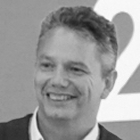
Adrian Bachtold
ICFO, Spain
Keynote – Plenary Session
Adrian Bachtold is an academic researcher from ICFO – The Institute of Photonic Sciences. The author has contributed to research in topics: Carbon nanotube & Graphene. The author has an hindex of 50, co-authored 133 publications. Previous affiliations of Adrian Bachtold include Lawrence Berkeley National Laboratory & Catalan Institute of Nanotechnology.
|
|
|
|
|
|
|
|
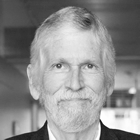
Miguel A. Camblor
ICMM-CSIC, Spain
Keynote – Plenary Session
Miguel A. Camblor is a Research Professor in the Instituto de Ciencia de Materiales de Madrid (CSIC), specialized in zeolite synthesis, physicochemical and structural characterization and applications. He has developed his career through CSIC, industry R&D, and an international postdoctoral stay at Caltech as a Fulbright Fellow. He has participated in numerous national and international research projects on zeolites, hybrid materials and sustainability, acting as principal investigator and coordinator in several of them, including the current HALZEOCAT-CM project on the elimination of persistent contaminants (SYG-2024-ECO-737) funded by Comunidad de Madrid. His service to the scientific community includes membership of the Structure Commission of the International Zeolite Association and participation in multiple editorial boards of international journals in materials science and chemistry.
|
|
|
|
|
|
|
|
Sonia Conesa Boj
TU Delft, The Netherlands
Invited – Plenary Session
Prof. Sonia Conesa-Boj obtained her Ph.D. in Nanoscience and Nanotechnology at the University of Barcelona (Spain) in 2011. Afterwards she moved to a postdoctoral research position at EPFL Lausanne, funded by a Marie-Heim Vogtlin personal fellowship awarded by the Swiss National Science Foundation. After a second postdoc in The Netherlands, in 2016 Dr. Conesa-Boj became Assistant Professor at the Department of Quantum Nanoscience and the Kavli Instiuture of Nanoscience at TU Delft, being promoted in 2020 and 2025 to Associate Professor and Full Professor respectively. The focus of her research is developing novel approaches for the growth and characterisation of low-dimensional nanoscale materials, from nanowires to van der Waals layered materials. She has demonstrated how the exploitation of state-of-the-art Transmission Electron Microscopy techniques provide a unique window to unravel the physical properties of novel nanomaterials. Dr. Sonia Conesa-Boj is the author of more than 40 peer-reviewed publications and her research has been supported, among others, by the award of an ERC Starting Grant, a NWO Vidi grant, and a Dutch "Top Kennis en Innovatie" Consortium grant.
|
|
|
|
|
|
|
|
Silvano de Franceschi
CEA, France
Keynote – Plenary Session
Silvano De Franceschi is an expert in quantum nanoelectronics and experimental mesoscopic physics. He received his PhD in 1999 at the Scuola Normale Superiore of Pisa and, he currently works as research director at the Interdisciplinary Research Institute of Grenoble (IRIG). In 2005 he was awarded the Nicholas Kurti European Prize for his achievements in the field of quantum transport and, in particular, his works on the Kondo effect in quantum dots and on hybrid normal/superconductor nanostructures. His current research activity focuses on the development of silicon-based devices for quantum information processing. He is co-leading the Grenoble Quantum Silicon Group (http://quantumsilicon-grenoble.eu) and he is one of the three PIs in the ERC Synergy project QuCube
|
|
|
|
|
|
|
|
Víctor Manuel de la Prida Pidal
Universidad de Oviedo, Spain
Invited – Plenary Session
Dr. V. M. Prida is Full Professor of Applied Physics in the Department of Physics at the University of Oviedo, where has been leading the Magnetic Materials and Nanomaterials research group since 2017. His main scientific interests focus on the synthesis and characterization of magnetic properties and magnetotransport phenomena in patterned ferromagnetic nanowires and nanotubes for spintronics applications, so as on Heusler-based alloys exhibiting ferromagnetic shape memory and magnetocaloric effects. He is also an active member of the IEEE Magnetics Society, serving as secretary and chair of the Spanish Chapter for the 2021–2025 term.
|
|
|
|
|
|
|
|
Luis Echegoyen
ICIQ, Spain
Keynote – Plenary Session
Prof. Echegoyen was the Robert A. Welch Professor of Chemistry from 2010-2021 (when he retired) at the University of Texas at El Paso and was President of the American Chemical Society in 2020. He was also the Director of the Chemistry Division at the US National Science Foundation from 2006 until 2010. He was Professor and Chair of the Chemistry Department at Clemson University (2002-2006). He has published >525 articles, including 49 book chapters, and his current h index is 98 (Google Scholar, 1 September 2025). He was elected Fellow of the American Association for the Advancement of Science in 2003 and was the recipient of many awards, including the 1996 Florida ACS Award, the 1997 University of Miami Provost Award for Excellence in Research, the 2007 Herty Medal Award from the ACS Georgia Section, and the 2007 Clemson University Presidential Award for Excellence in Research. He was also selected as an ACS Fellow in 2011 and Fellow of the Royal Society of Chemistry in 2019. He works at the Instituto Catalán de Investigación Química (ICIQ) where he is the International Chair for Academic Programs, acting as an ambassador for the institute, mainly focused in Latin America.
|
|
|
|
|
|
|
|
María José Esplandiu
ICN2, Spain
Invited – Plenary Session
Dr. M.J. Esplandiu earned her PhD in Chemistry from the National University of Córdoba (Argentina). She completed postdoctoral training at the Technical University of Dresden, the Technical University of Dresden and Ulm University, and later at UCLA and CALTECH (USA), specializing in surface electrochemistry and scanning probe nanoscopies. Following a Ramón y Cajal Fellowship at the UAB, she joined the Catalan Institute of Nanoscience and Nanotechnology as CSIC researcher. Her research spans low-dimensional nanomaterials (carbon nanotubes, graphene and transition metal dichalcogenides), multifunctional nanostructures, photo(electro)catalysis, and active matter, including self-propelled micro/nanomotors and the electrokinetic and hydrodynamic mechanisms underlying autonomous motion, with applications in sustainable energy, environmental remediation, and biomedicine.
|
|
|
|
|
|
|
|
Josep Ferre-Borrull
URV, Spain
Invited – Plenary Session
Josep Ferré-Borrull is a Full Professor at URV in the Department of Electronic Engineering. His research focuses on the application of porous materials to the fields of sensing and energy storage. He has extensive expertise in the development of various technologies for the fabrication of nanoporous materials and their applications to photonic biosensing, especially in the enhancement of the interaction of light with such materials. He also has worked intensely in the numerical modeling of the interaction of light with the nanostructured and anisotropic materials. With 30 years of research experience, he has worked on 9 projects funded in Spanish competitive calls and 3 projects derived from contracts with companies. He is the responsible of the Doctoral Program in Technologies for Nanosystems, Bioengineering and Energy at the URV.
|
|
|
|
|
|
|
|
Anton Ficai
National University of Science and Technology POLITEHNICA Bucharest, Romania
Keynote – Plenary Session
Anton FICAI (born 1981) is full professor and PhD coordinator in the Faculty of Chemical Engineering and Biotechnologies, National University of Science and Technology POLITEHNICA Bucharest being actively involved in both academic and scientific life of the university. His major academic interests are related to Composite Materials for Medicine, NanoBioMaterials for Tissue Engineering, Coatings and Chemical Surface Modification, and Drug Delivery Systems. Till now, over 400 scientific papers, from which over 350 ISI papers and 24 books or chapters (including 3 edited books) were published along with 14 issued patents. The international recognition of the R&D activity can be highlighted by the multiple invitations for participate as speaker at international conferences, the positions of guest editors, member of the editorial boards of different national and international journals, Section Editor in Chief of Coatings as well as ranked within the prestigious rankings such as Research.com, Stanford's Top 2% Scientists or AD Scientific. Valedictorian of POLITEHNICA Bucharest, former participant and laureate of the National Chemistry Olympiads he was awarded with over 150 Gold Medals, Special Awards or Best Paper Awards but also with the Special Prize awarded by the Ministry of Education and Research at the first Research Gala, 2023. He is also full member of The Academy of Romanian Scientists and several professional societies.
|
|
|
|
|
|
|
|
Felipe Gándara
ICMM-CSIC, Spain
Keynote – Plenary Session
Dr. Felipe Gándara is a Staff Scientist at the Materials Science Institute of Madrid (ICMM-CSIC), where he leads research in reticular chemistry and porous materials. His work focuses on the design, synthesis, and advanced structural analysis of metal-organic frameworks (MOFs) and covalent-organic frameworks (COFs) for applications in energy and environmentally related fields.
He obtained his Ph.D. in Chemistry in 2009 from the Universidad Autónoma de Madrid under the supervision of Prof. M. A. Monge and Dr. N. Snejko, followed by postdoctoral research in the group of Prof. O. M. Yaghi, at UCLA (2009-2012) and UC Berkeley-LBNL (2012-2014), where he specialized in the development of framework materials. Since returning to ICMM-CSIC, he has held positions as a CSIC-ComFuturo and Ramón y Cajal researcher before becoming a Staff Scientist in 2020. His work integrates synthetic chemistry, advanced structural analysis, and computational modeling to understand and design new functional materials.
|
|
|
|
|
|
|
|
Aran Garcia-Lekue
DIPC, Spain
Keynote – Plenary Session
Aran García-Lekue is an Ikerbasque Research Professor and Director of Strategic Projects at the Donostia International Physics Center (DIPC). She obtained a degree in Physics with Extraordinary Honors and a European PhD in Materials Science and Engineering from the University of the Basque Country. After postdoctoral appointments at the University of Liverpool and the Lawrence Berkeley National Laboratory, she joined DIPC and has since established an internationally recognized research career. In 2025, she was awarded the Ikerbasque Consolidator Prize in recognition of her scientific excellence, leadership, and contributions to the field. She was a Visiting Fellow at Clare Hall, University of Cambridge, during the 2025–2026 academic year. Her research focuses on the theory and simulation of quantum nanoelectronics, with a particular emphasis on carbon-based nanostructures.
|
|
|
|
|
|
|
|
Filippo Giubileo
CNR-SPIN, Italy
Invited – Plenary Session
Filippo Giubileo is Research Director at the Institute for Superconductors, Innovative Materials and Devices (CNR-SPIN), National Research Council of Italy. His research focuses on the electronic properties and transport phenomena in low-dimensional materials and nanostructures, with particular emphasis on nanoelectronic devices, field-effect transistors and electron field emission. His experimental activity includes the fabrication and electrical characterization of devices based on two-dimensional materials, semiconductor nanowires and related nanostructures. He has authored more than 160 scientific publications in international peer-reviewed journals and has extensive experience in the investigation of nanoscale electronic and surface phenomena.
|
|
|
|
|
|
|
|
Mato Knez
CIC nanoGUNE, Spain
Invited – Plenary Session
He developed his PhD at the Max Planck Institute FKF Stuttgart and at the University of Ulm between 1999 and 2003. He then moved to a post-doc position at the Max-Planck Institute of Microstructure in Halle where, since 2006, he was leading the research group of Functional 3D-Nanostructures by Atomic Layer Deposition. He was Visiting Professor at the Università Degli Studi di Brescia (Italy) in 2009.
He received the Nanofutur-award by the German ministry of education and research in 2006 and very recently in 2012 the Gaede-Award of the German Vacuum Society and the German Physical Society.
His research work has its main focus on the synthesis and functionalization of novel materials utilizing atomic layer deposition (ALD) as universal tool for functionalization and modification
|
|
|
|
|
|
|
|
Luis Liz-Marzán
CIC biomaGUNE, Spain
Keynote – Plenary Session
Luis M. Liz-Marzán is a PhD from the University of Santiago de Compostela and has been postdoc at the van't Hoff Laboratory (Utrecht University) and visiting professor at various institutions worldwide. After an extended academic career at the University of Vigo, in 2012 he joined the Basque Center for Cooperative Research in Biomaterials (CIC biomaGUNE), in San Sebastian, as Ikerbasque Research Professor and Scientific Director, a position he held until December 2021. Since 2015 he is also the PI of the CIC biomaGUNE node of the Biomedical Research Networking Center: Bioengineering, Biomaterials and Nanomedicine (Ciber-BBN) and since 2022 he holds a part-time Chair at the University of Vigo. Liz-Marzán is recognized by his work on the application of colloid chemistry to the (nowadays crowded) field of nanoplasmonics.
|
|
|
|
|
|
|
|
Manuel Marques
UAM, Spain
Invited – Plenary Session
Manuel Marques obtained his B.A in physics at Universidad Complutense de Madrid in 1995 and was awarded with an extraordinary Ph.D. prize in physics at Universidad Autonoma de Madrid in 2000. Fullbright fellow at Boston University from 2001 to 2003. In 2003 he was awarded with a Ramón y Cajal appointment at the Universidad Autonoma de Madrid. Manuel Marques is now Associate Professor in the Material Physics Department and member of the Institute of Condensed Matter Physics (IFIMAC). He has coauthored more than 100 scientific articles with around 2000 citations
|
|
|
|
|
|
|
|
Cesar Moreno Sierra
Universidad de Cantabria, Spain
Invited – Plenary Session
Dr. César Moreno is an Associate Professor of Condensed Matter Physics at the University of Cantabria (Spain). His research focuses on the atomically precise synthesis and characterization of low-dimensional materials, with particular emphasis on graphene-based nanostructures, graphene nanoribbons, and hybrid architectures incorporating molecular and transition-metal functionalities. His work combines bottom-up on-surface synthesis, scanning tunneling microscopy and spectroscopy, and spectroscopic techniques to explore electronic, magnetic, and structural properties at the atomic scale for applications in nanoelectronics, biomedicine sensors and quantum technologies.
|
|
|
|
|
|
|
|
Sara Núñez Sánchez
ICMM-CSIC, Spain
Invited – Plenary Session
Sara Núñez Sánchez is a Tenured Scientist at ICMM-CSIC (Madrid, Spain), where she leads the BioQMat Lab (https://sites.google.com/view/bioqmat) within the SUPREMA Group. Her research focuses on the development of bioinspired excitonic materials and molecular nanophotonic systems based on organic and supramolecular architectures. Combining expertise in nanophotonics, polaritonics, soft matter and advanced optical materials, she investigates collective light-matter interactions in molecular nanostructures and their potential for energy conversion and photonic technologies.
She has developed an international and multidisciplinary career across leading institutions in Spain, the United Kingdom, Portugal and the United States, working at the interface of physics, chemistry, materials science and engineering. Her current research aims to harness quantum-inspired processes in molecular materials to create novel photonic functionalities. She is the coordinator of the EIC Pathfinder Open project ADAPTATION, focused on polariton-enabled energy technologies, and serves as President of the Nanophotonics Committee of SEDOPTICA and Senior Member of OPTICA.
|
|
|
|
|
|
|
|
Pablo Ordejón
ICN2, Spain
Keynote – Plenary Session
Prof Pablo Ordejón was appointed as director of the center Catalan Institute of Nanoscience and Nanotechnology (ICN2) in 2012. He was born in Madrid in 1964, holds a PhD in Physics from the Autonomous University of Madrid and has developed his career in several scientific laboratories and universities in Spain and the University of Illinois (United States). Today he is the director of ICN2 and still deputy director of CIN2 (Research Center for Nanoscience and Nanotechnology) and leads the ICN2 Theory and Simulation Group.
Since 2005, Dr. Ordejón is an honorary member of the American Physical Society (APS). In 2003 he received the Badge of Honor of the Spanish Association of Scientists. He was also a member of several international scientific committees responsible for scientific evaluation and the National Agency for Evaluation and Prospective (ANEP) and the Spanish Supercomputing Network (RES).
|
|
|
|
|
|
|
|
José Ignacio Pascual
CIC nanoGUNE, Spain
Keynote – Plenary Session
José Ignacio (Nacho) Pascual is since 2012 an Ikerbasque Research Professor at CIC nanoGUNE. His research explores quantum phenomena at the atomic scale using scanning probe microscopies, with particular interest in unconventional superconductivity, molecular magnetism, and atomically precise graphene nanostructures. Nacho earned his PhD in Physical Sciences from the Universidad Autónoma de Madrid (1998) and developed his career across leading research institutions including the Max-Planck-Gesellschaft, ICMAB-CSIC, and the Freie Universität Berlin, where he was appointed Professor of Physics in 2008. He joined nanoGUNE in 2012 and currently leads a team of 12 researchers.
|
|
|
|
|
|
|
|
Artur Pinto
University of Porto, Portugal
Invited – Plenary Session
Artur M. Pinto graduated in Pharmaceutical Sciences, obtaining his PhD in Biomedical Engineering from Faculty of Engineering - University of Porto (FEUP), visiting the University of Washington (USA). Afterward, Artur has been appointed as a Post-Doctoral Researcher at Eindhoven University of Technology, Chemical Engineering Department, the Netherlands. Following his Post-doc, Artur has been awarded a long-term Researcher position at LEPABE-FEUP. He is the Principal Investigator of 2 collaborative projects between FEUP, i3S (Institute for Research and Innovation in Health), and the University of Texas in Austin (USA), focused on developing new 2D-nanomaterials and adjusting their properties for biomedical applications, such as cancer phototherapy, immunotherapy, drug delivery, and 3D-printing for tissue regeneration.
|
|
|
|
|
|
|
|
Stephan Roche
ICREA / ICN2, Spain
Keynote – Plenary Session
Prof. Stephan Roche is a theoretician with more than 25 years’ experience in the study of transport theory in low-dimensional systems, including graphene, carbon nanotubes, semiconducting nanowires, organic materials and topological insulators. He has published more than 250 papers in journals such as Nature, Review of Modern Physics, Nature Physics, Nano Letters and Physical Review Letters and he is the co-author of the book titled “Introduction to Graphene-Based Nanomaterials: From Electronic Structure to Quantum Transport” (Cambridge University Press, 2020-second edition). He received the qualification to supervise PhD students from the Université Joseph Fourier (Grenoble, France) in 2004, and since then he has supervised more than ten PhD students and about 25 postdoctoral researchers in France, Germany and Spain. In 2009 Prof. Roche was awarded the Friedrich Wilhelm Bessel Research Award by the Alexander Von-Humboldt Foundation (Germany) and, since 2011, he has been actively involved in the European Graphene Flagship project as deputy leader of the Spintronics Work Package (WP). He is serving as leader of this WP since April 2020 and will continue until March 2023. He is also Division Leader of the Graphene Flagship.
|
|
|
|
|
|
|
|
Michael J. Sailor
UC San Diego / MRSEC, USA
Keynote – Plenary Session
Michael J. Sailor is Distinguished Professor at the University of California, San Diego, Director of the UC San Diego Materials Research Science and Engineering Center (an NSF MRSEC), and Director of the UC San Diego Institute for Materials Discovery & Design. He holds Affiliate Appointments in the UCSD Bioengineering Department, the Nanoengineering Department, and the Materials Science and Engineering program. He was trained at Harvey Mudd College (BS Chemistry), Northwestern University (PhD Chemistry), Stanford (Post-doctoral), and Caltech (Postdoctoral). Other appointments include: Invited Professor, CNRS Institut Charles Gerhardt in Montpellier, France (2012); Visiting Professor, High Level Talent Program, Key Laboratory of Organosilicon Chemistry and Material Technology, Hangzhou Normal University, China (2018-2020); and Visiting Professor, Zhejiang University, China (2019- 2020). He has supervised more than 160 undergraduate, graduate, and post-doctoral students, he is the author of more than 260 peer-reviewed research publications, one book, and 39 issued patents. He has an H-Index (Google Scholar) of 101. He has founded or co-founded four companies, including Lisata Therapeutics (NASDAQ: LSTA). He also serves on the scientific advisory board of TruTags, inc, which developed a GMP process to manufacture medical grade porous silicon suitable for oral, injectable, or inhalation administration. He is an elected Fellow of the American Association for the Advancement of Science, the U.S. National Academy of Inventors, and the Royal Society of Chemistry.
|
|
|
|
|
|
|
|
Daniel Sanchez Portal
DIPC / CSIC-UPV/EHU, Spain
Keynote – Plenary Session
Daniel Sánchez Portal is a CSIC Research Professor at Centro de Fisica de Materiales de San Sebastian (CSIC-UPV/EHU). His expertise covers the methodology of density functional theory (DFT) based first-principles electronic structure calculations and their application to the study of nanostructures and surfaces. He is one of the developers of the SIESTA code (https://siesta-project.org) for electronic structure simulations, which is used nowadays by hundreds of academic and industrial users (freely distributed under the GPL license). He has published over 190 scientific papers with quite a large impact. He was elected a Fellow of the American Physical Society in 2015 for his contribution to the development of methodologies for electronic structure calculations.
|
|
|
|
|
|
|
|
Ana Sánchez-Grande
Universidad Complutense de Madrid, Spain
Invited – Plenary Session
I hold a MSc in chemistry from Universidad Complutense de Madrid (UCM). In 2020, I completed my PhD studies at Imdea Nanoscience, mainly focused on the design and characterization of 1D π-conjugated polymers on surfaces. Then, I joined the Nanosurf lab group led by Pavel Jelínek at the Institute of Physics of the Czech Academy of Sciences (FZU) as postdoctoral researcher, where my main research interest was dedicated to on-surface photochemistry. Currently, I work at the Organic Chemistry Department from the Faculty of Chemical Sciences at UCM as a Talent Attraction Research Associate. My technical skills consist of several ultra-high vacuum (UHV) surface science microscopy techniques such as low temperature scanning probe microscopy and spectroscopy (STM/STS, nc-AFM).
|
|
|
|
|
|
|
|
Vicente Torres-Costa
Universidad Autónoma de Madrid, Spain
Invited – Plenary Session
V. Torres-Costa got his PhD researching the optical properties of porous silicon and developing photonic and optoelectronic applications such as filtered light emitting and detecting devices, photonic crystals or chemical and biological optical sensonrs, among others.
In the last decade he has become involved in the research of complex micro and nanostructured materials produced by physical vapor deposition in oblique-angle configuration. He has recently led an international consortium to use these kind of material in hazardous chemical optical sensing.
V. Torres-Costa's research interests are currently focused on advanced applications of micro and nano structured materials, mainly silicon, germanium and their derivaties, in optics, optoelectronics, electronics and sensing.
Additionally, his expertise in the fabrication of nanostructured surfaces and their applications, has allowed him to collaborate in parallel research lines such as biomaterials, biomedicine and optical and electrical biosensors
|
|
|
|
|
|
|
|
Krasimir Vasilev
Flinders University, Australia
Keynote – Plenary Session
Professor Vasilev Completed PhD in Max-Plank Institute for Polymer Research (Mainz, Germany) in 2005. He is currently a Matthew Flinders Professor, NHMRC Leadership Fellow and the Director of the Biomedical Nanoengineering Laboratory in the College of Medicine and Public Health at Flinders University. His research interests are in developing innovative nanoengineered materials and coatings that benefit various medical applications and other areas. Professor Vasilev has attracted in excess of 25M dollars in research funding from competitive Government grants and Industry, published more than 330 papers, > 15,000 citation and H-index=68 (m-index>3). He has been awarded several prestigious Research Fellowships from ARC, NHMRC and the Humboldt Foundation, and other awards such as the John A. Brodie Medal from Engineered Australis for achievements in Chemical Engineering.
|
|
|
|
|
|
|
|
Nicolas Voelcker
Monash University, Australia
Keynote – Plenary Session
Professor Nicolas Voelcker is the Director of the Melbourne Centre for Nanofabrication (MCN) and Professor at the Monash Institute of Pharmaceutical Sciences at Monash University and ARC Laureate Fellow. The core research activity in his laboratory is the study of silicon-based nanostructures at biointerfaces. Following from this more fundamental research drive, his focus is on the application of nanostructured materials in point-of-care and wearable biosensors, nanoparticle-based drug delivery, nanowire-based gene delivery as well as in regenerative medicine. Tissue-barrier-on-chip technology developed in his lab supports the design of his nanoparticle systems.
He has authored over 570 peer-reviewed journal articles with over 31,000 citations, h-index 85, and has filed over 50 patents. He has received fellowships from the German Research Foundation (DFG), the CSIRO and the Alexander von Humboldt Foundation. He has served on the College of Experts of the Australian Research Council, is a Fellow of the Australian Academy of Technology and Engineering, a winner of a Humboldt Research Award and a current Australian Research Council Laureate Fellow. IP generated from his research has led to five start-up companies in the areas of cell therapy, drug delivery and diagnostics.
As Director of the MCN, he is overseeing the largest joint venture in the Australian university system, and is supporting over 30 companies in their commercialisation endeavours.
|
|
|
|
|
|
|
|
Xavier Waintal
PHELIQS, INAC / CEA Grenoble, France
Keynote – Plenary Session
I graduated from Polytechnique school, Paris area, in 1995 (X92), did a master of theoretical physics at Ecole Normale Superieure Paris, and moved on to the group of J-L Pichard in Saclay for my PhD (1999). I spent two years as a postdoc in P. Brouwer's group in Cornell University, USA and was hired as a permanent researcher in CEA Saclay in 2002. In 2009, I moved to INAC, CEA Grenoble where I have remained since. You can find almost all my publications here, on arXiv. Currently Director of the House of Quantum Grenoble Alpes
|
|
|
|
|
| |
|
|